Case studies first: the problem, the constraints, what I personally owned, what shipped,
and what came of it. Every number below links to where you can check it.
Took an AI agent capability from prototype through security, legal, and compliance review into production at a regulated consumer lender.
My role: I owned the agent capability end to end: the architecture, the tool surface the model was allowed to call, the evidence design that got it through legal and compliance review, and the approval gates on irreversible actions. Engineering built alongside me; the review strategy, the retention decision, and the control design were mine.
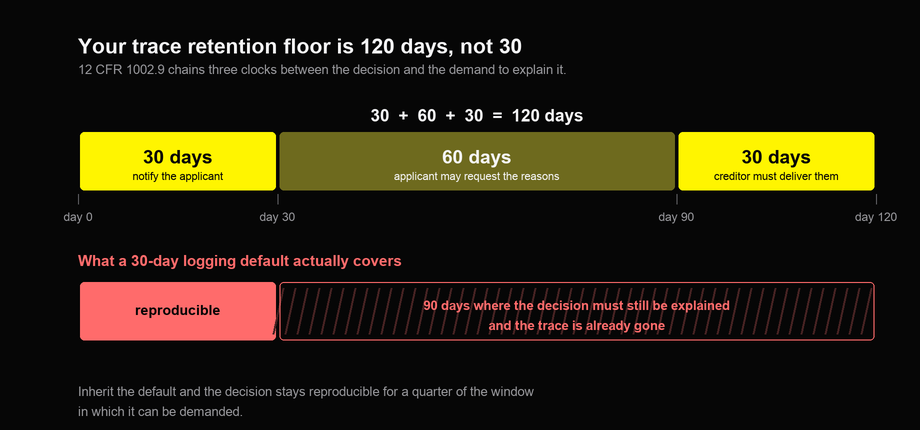
120-day trace retention floor — Derived from the adverse-action dispute window rather than from a logging default. Most agent logging ships at 30 days, which expires before the evidence is ever requested. Read the full write-up
67 guidance documents withdrawn, zero design changes required — Building against the statute rather than against guidance meant the May 2025 CFPB withdrawal — which removed both circulars covering algorithmic adverse-action notices — did not invalidate the control design. Read the full write-up
An approval path where there had not been one — The capability now has a documented route through security, legal and compliance review that a later one can follow. Before this, no agent capability at the company had been through all three. How the review was framed
Reasons emitted by the deciding component, not reconstructed — A reason string generated after the fact by a model that did not make the decision is a plausible narrative, not a statement of specific reasons. The tool surface carries the reason out of the component that actually decided. Why the reason string has to come from the decision
Irreversible actions moved behind a human gate — Anything the agent cannot undo is not model-discretionary. That is a design property of the tool surface rather than a policy asking the model to behave. Read the full write-up
A private template and generator that builds, deploys and verifies a lead-gen website for a trade business from one intake file, with quality gates that refuse a dishonest or thin site.
My role: I owned the contract (what five minutes means), the decision records, the media policy, the fabrication rules in the schema, and the verification step that decides when a deploy is allowed to call itself live. The kit, the gates and the two client sites were built with an agent; the rules it builds against are mine.
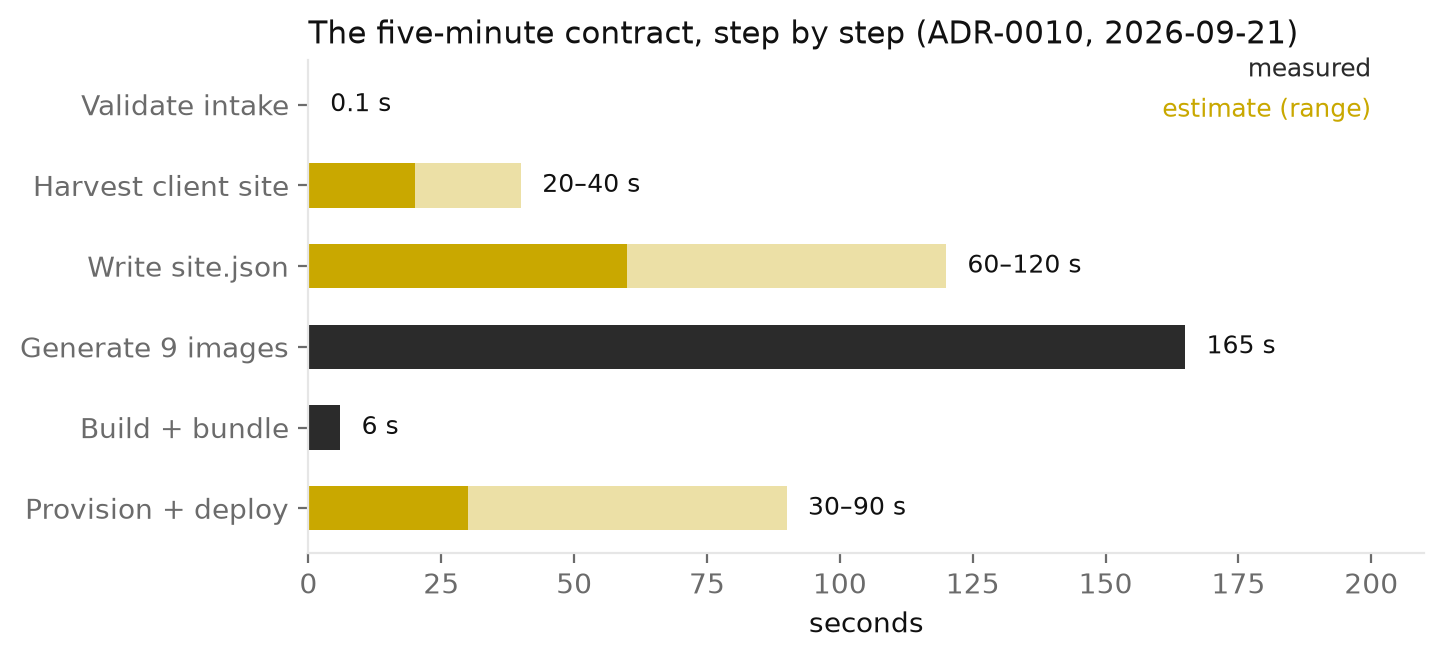
46.5 s from template to verified live site — Database 2.2 s, bot-check widget 0.3 s, build 1.3 s, repository from template 17.6 s, deploy 11.2 s, verify 13.8 s. Measured 2026-09-21. White paper, section 3
21% → parity-plus on content depth — The first launched site had 1,613 words against a 7,722-word reference and was destroyed the same day. Rewritten fixtures carry 10,000 to 12,000 words and score 92+ where the reference scores 75.9. White paper, section 4
Image generation sized to the budget: 43 s hero, 15.2 s everything else — Four settings measured on 2026-09-21; all judged usable by eye. Nine images run in parallel with harvesting and writing, so the critical path is 200 to 260 s. White paper, section 3
The internal operating system for a six-person maintenance company: one Postgres database, a static page, twelve serverless functions, and an agent that works its own task queue twice a day.
My role: I designed the operating model (a task is done once, a process repeats and spawns tasks, a role owns processes), the hub-not-mesh architecture, the agent desk and its hand-over rule, and the attribution design. Thirty decision records are mine; the code was built with agents against them.
A 62 KB query string, a 400, and a tab that went down — 2,493 accounts on the board × 24-character ids in one filter. Fixed by paging the mirror in memory, and separately by making the optional lookup unable to fail the page it decorates. White paper, section 4
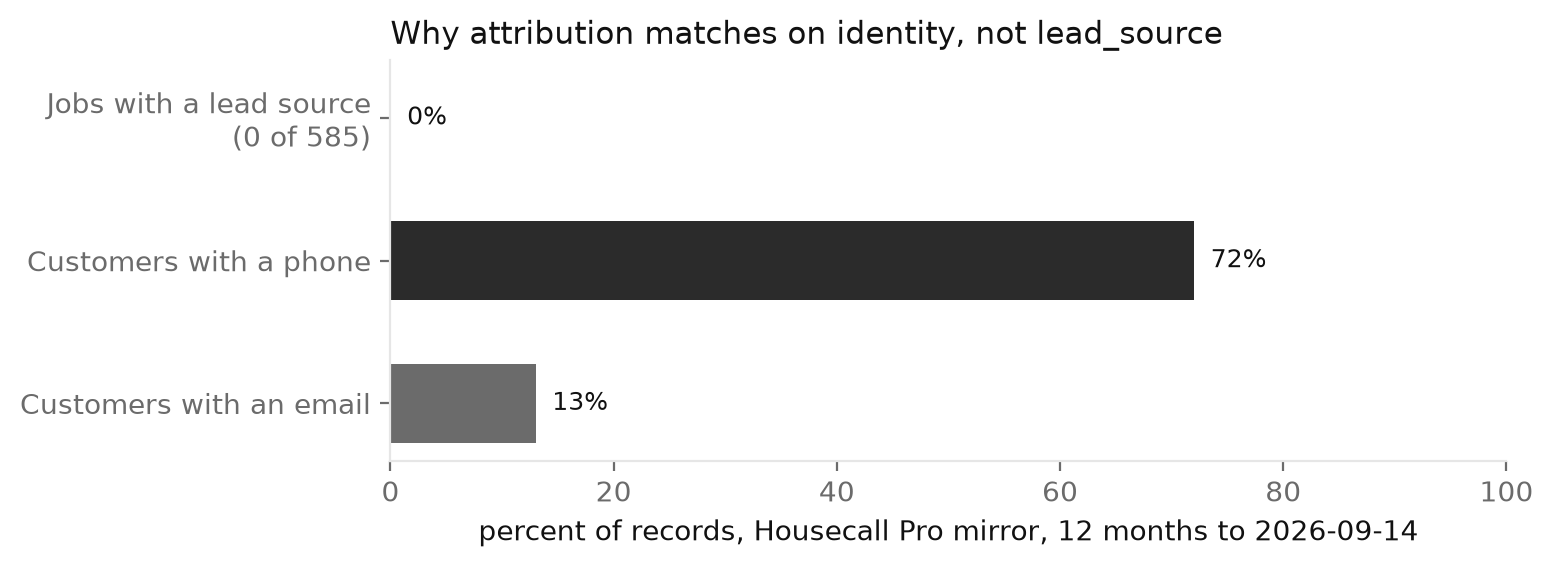
Attribution by identity: 0 of 585 jobs had a lead source, 72% of customers have a phone — Ad leads match on the last ten digits of the phone first, then email. Cost metrics are null until their denominator exists, and the funnel names the rung that is holding. White paper, section 5
9 of 10 agent-owned tasks were parked where nobody looks — The desk now reassigns a task to the person who holds the last system in the chain, with the click path in the notes. "Blocked" means waiting on another task again. White paper, section 6
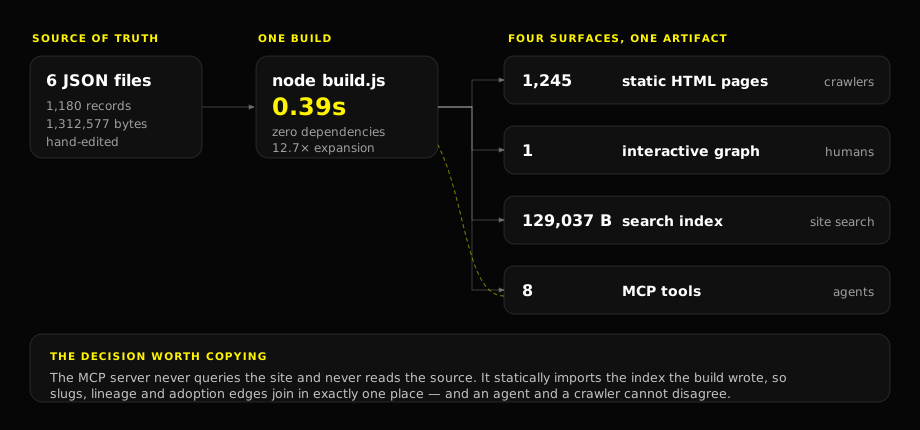
A build that publishes 1,180 records four ways — static pages, an interactive graph, a search index, and an MCP server — in 0.39 seconds with zero dependencies.
My role: I designed and built the whole pipeline: the source ontology, the build, all four output surfaces, and the MCP tool design. The decision worth copying — having the MCP server import a build artifact rather than query the site — is the one I would defend hardest.
1,180 records → four surfaces in 0.39 seconds — One command, zero npm dependencies, writing all four outputs from six hand-edited JSON files. Read the full write-up
12.7× read-surface expansion — 1,312,577 bytes of source becomes 16,644,215 bytes of generated read surface — and every byte of it is disposable. Read the full write-up
7,492 links of drift on the one surface the build does not own — The measured cost of the failure mode the architecture was designed to prevent, observed on the single surface left outside it. Read the full write-up
A dealer-gamma pipeline that recomputes option-chain levels every fifteen minutes — and the append-only write that caught it moving levels on a closed market.
My role: I built the pipeline and the study it writes, and I found the defect. The fix was not a code change so much as an instrumentation decision: the system was already wrong, and the only reason it became visible is that I stopped letting it overwrite its own evidence.
Gamma flip walked 718.3 → 722.2 with spot pinned at 717.12 — Eight consecutive writes on a closed market: put wall 710 → 700, net GEX 598 → 626 → 611, and not a single share traded. The chain re-fit and the levels moved on their own. Watch the clip and read the transcript
33 runs per day across 7 underlyings — The cadence that made the drift frequent enough to catch once there was an append-only record to catch it in. Watch the clip and read the transcript
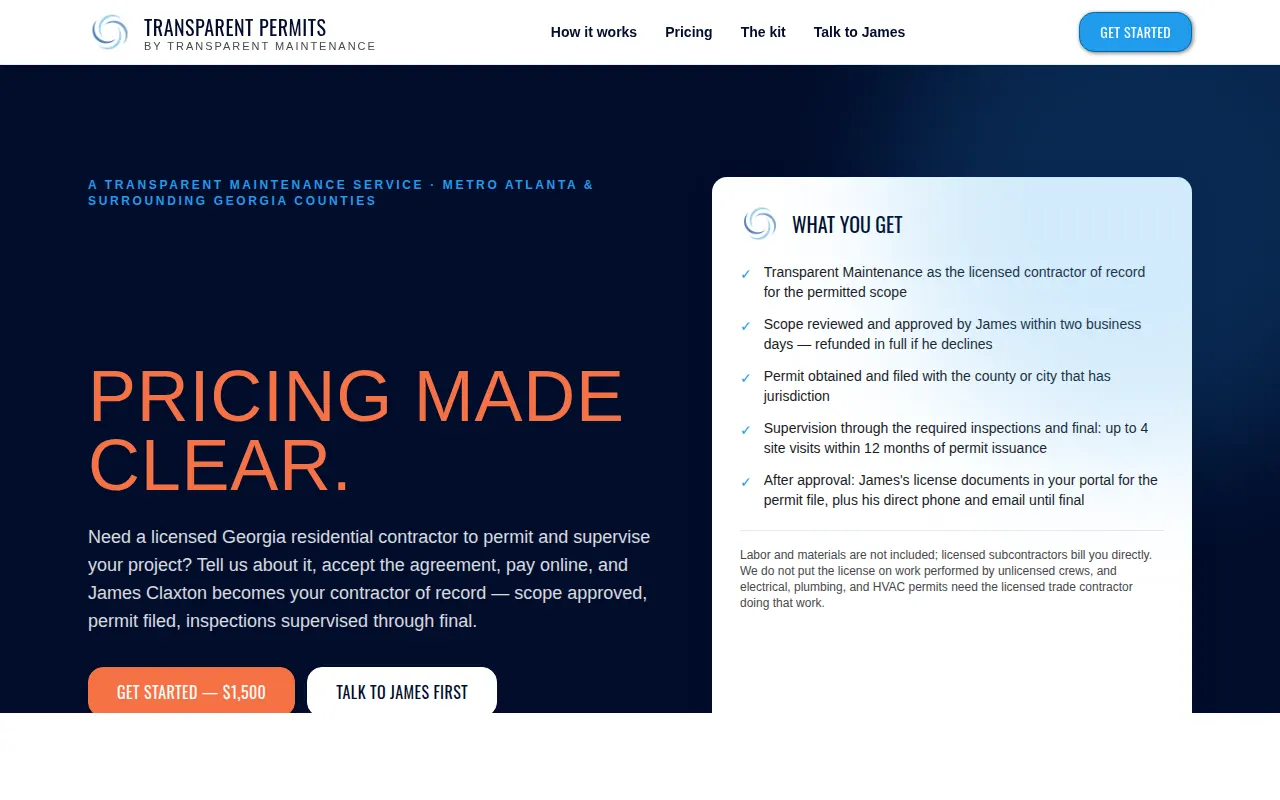
Self-serve contractor-of-record service for a licensed Georgia residential contractor: structured intake with hard stops that refuse licence-lending patterns, server-priced Stripe checkout, scope approval that gates the documents, and a private portal. Rebuilt in one day when the statute was read against the launch pitch.
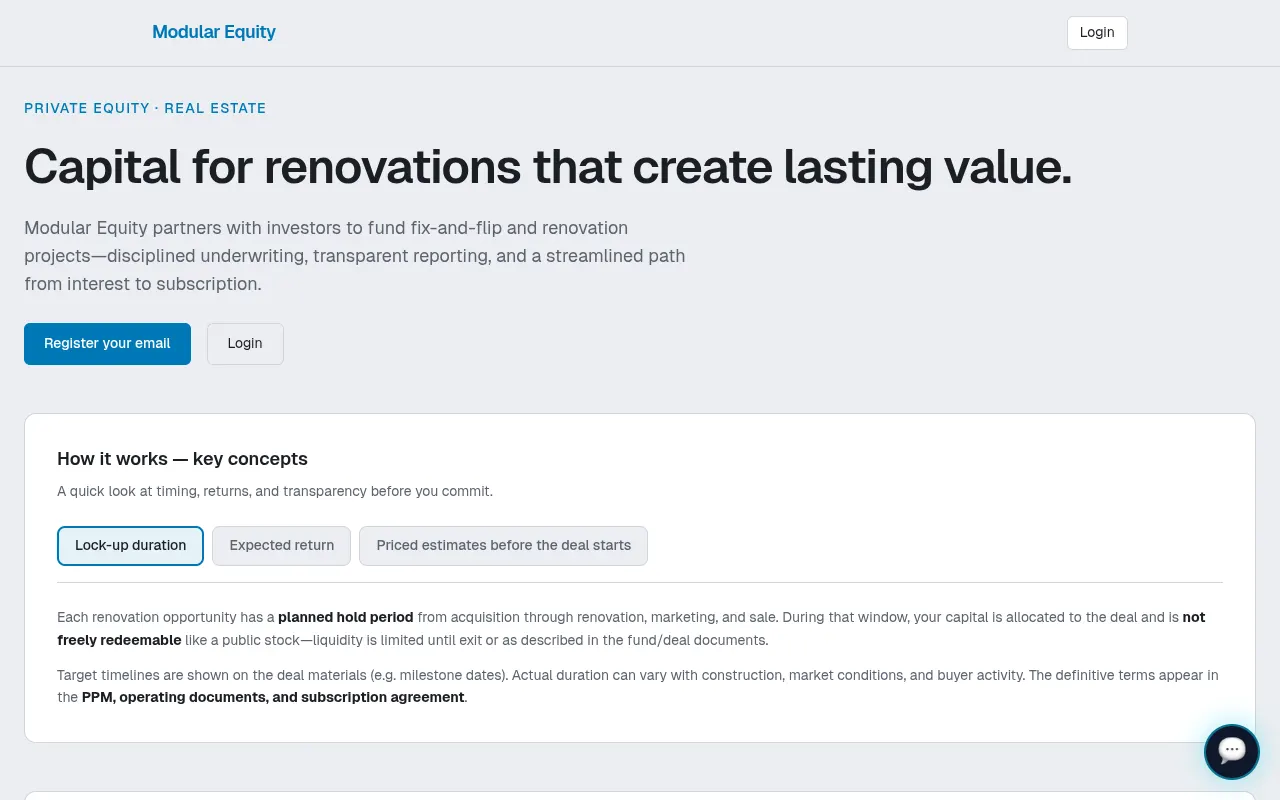
Investor portal for a renovation-focused fund. Raises and reports on fix-and-flip deals with disciplined underwriting, transparent reporting, and a streamlined interest-to-subscription flow.
Luxury live-shopping storefront for authenticated designer handbags. Bid live on Whatnot or shop the collection any time, with a 100% authentication guarantee.
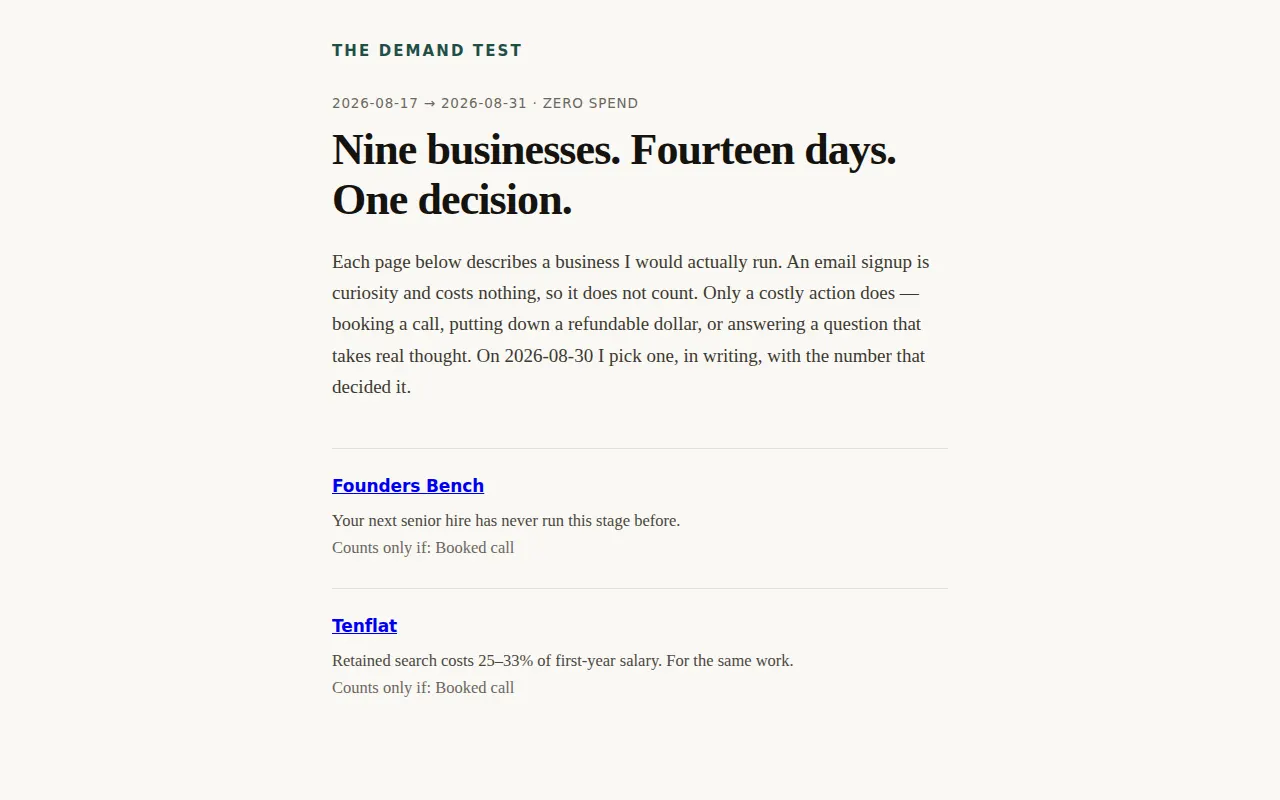
A public, zero-spend validation run: nine business ideas, fourteen days, each with its own landing page and its own pass/fail threshold — a booked call, a $1 refundable deposit, a written reply. One gets built, and the data behind the pick gets published with it.
The instrumentation behind the demand test — nine landing-page funnels compared side by side, so the decision at the end is read off a chart instead of argued. Access is allowlisted, so the public entry point is the sign-in screen.
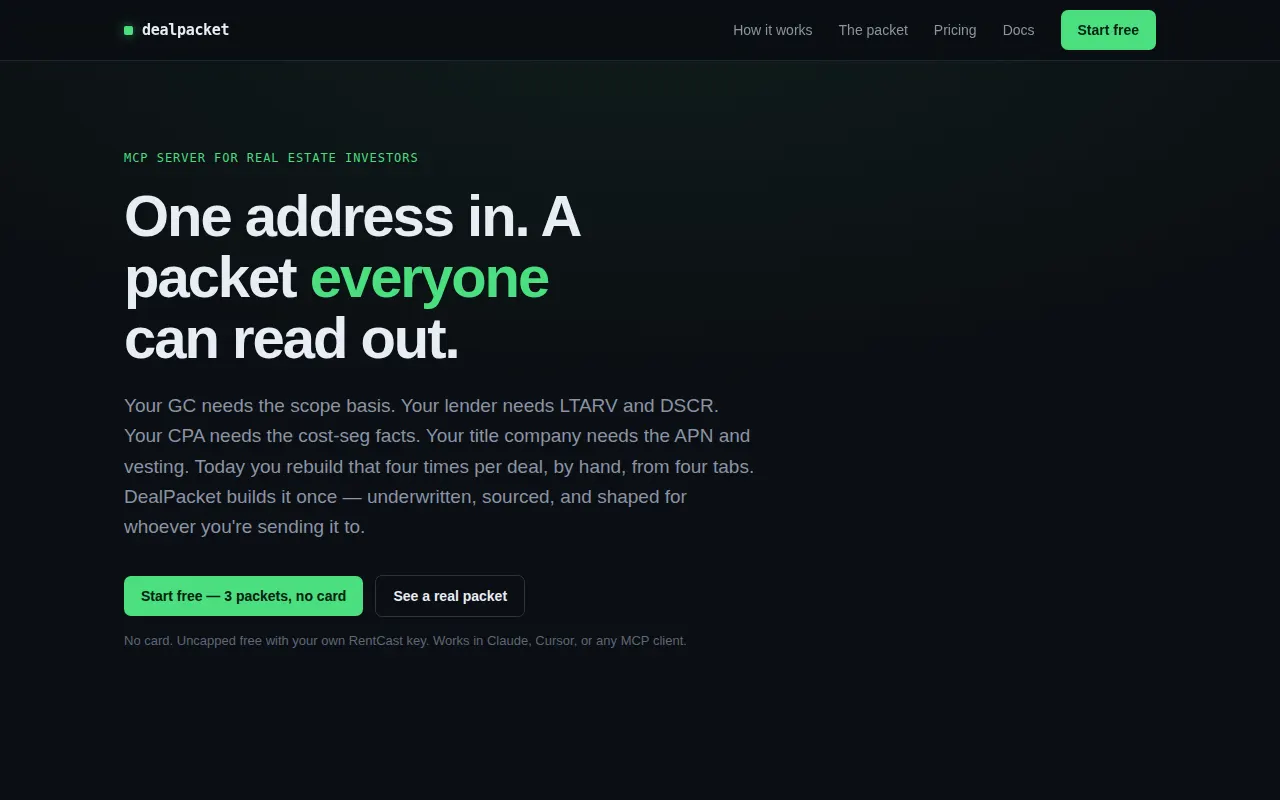
Real-estate underwriting as an MCP server. One address returns ARV, rent estimates, comps and ownership, then renders the same packet five ways — investor, GC, lender, CPA, title — with the source and fetch timestamp printed beside every figure.
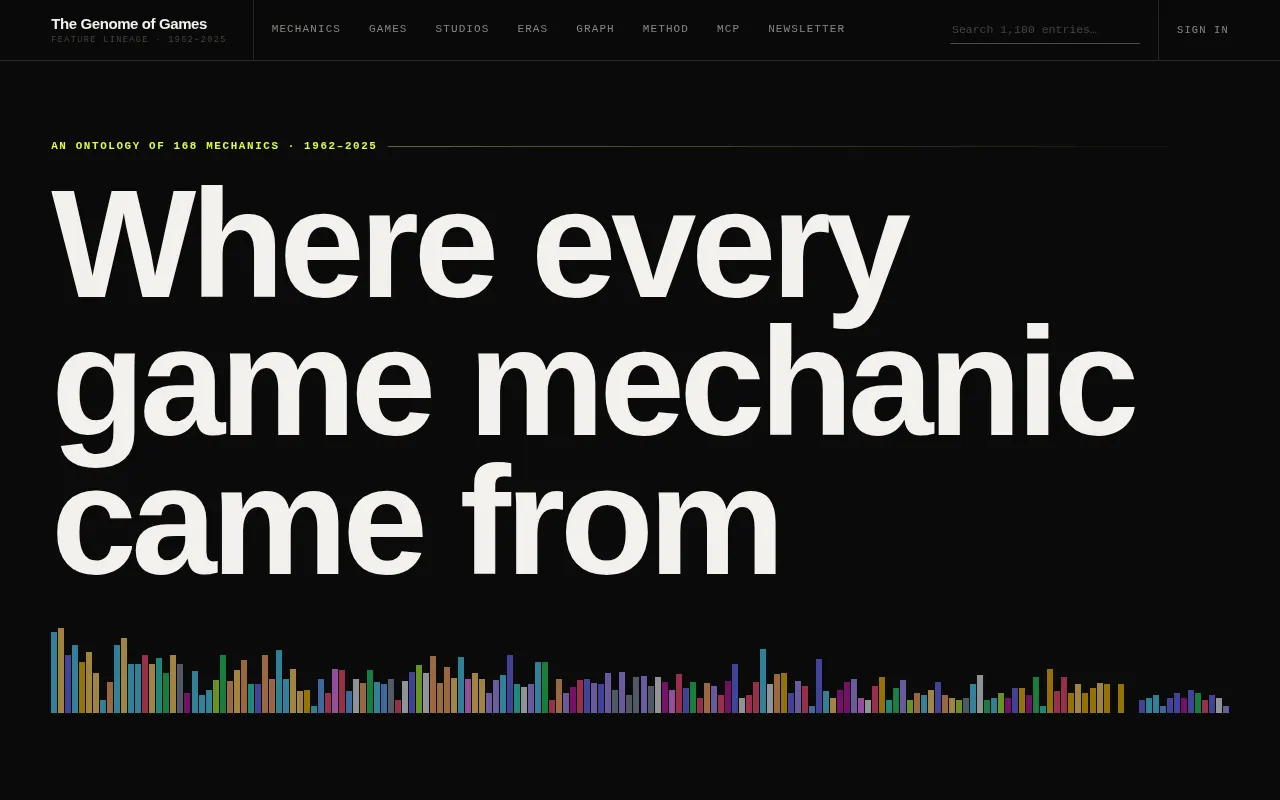
168 game mechanics, 618 games, 394 studios and 4,366 inheritance links from 1962 to 2025 — grouped by the design problem each mechanic solves rather than by genre, with every one traced back through its ancestors.
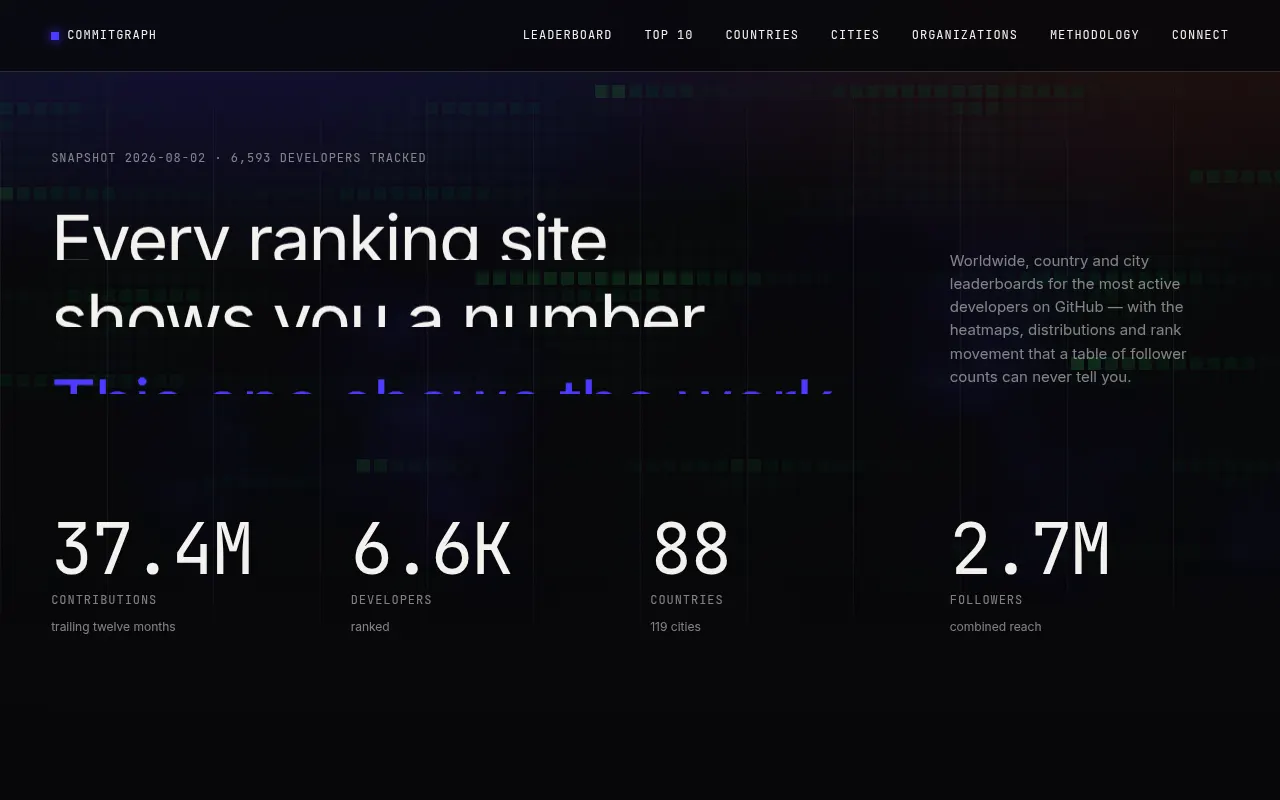
Worldwide, country and city leaderboards for the most active developers on GitHub — with the contribution heatmaps, rank-movement bump charts, tile-grid maps and follower/output scatter that a table of follower counts cannot show.
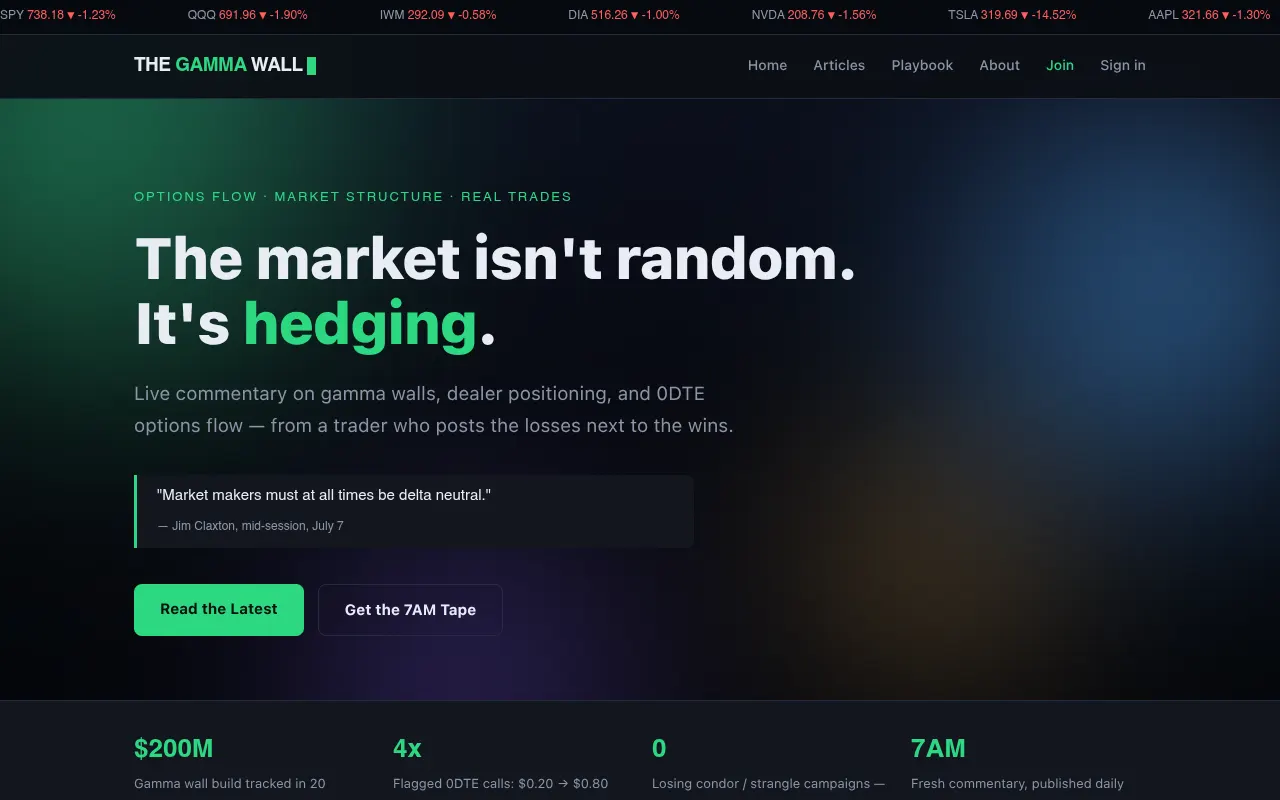
Options-flow and market-structure publication. Live commentary on gamma walls, dealer positioning, and 0DTE flow, plus a daily pre-market tape and subscriber articles.
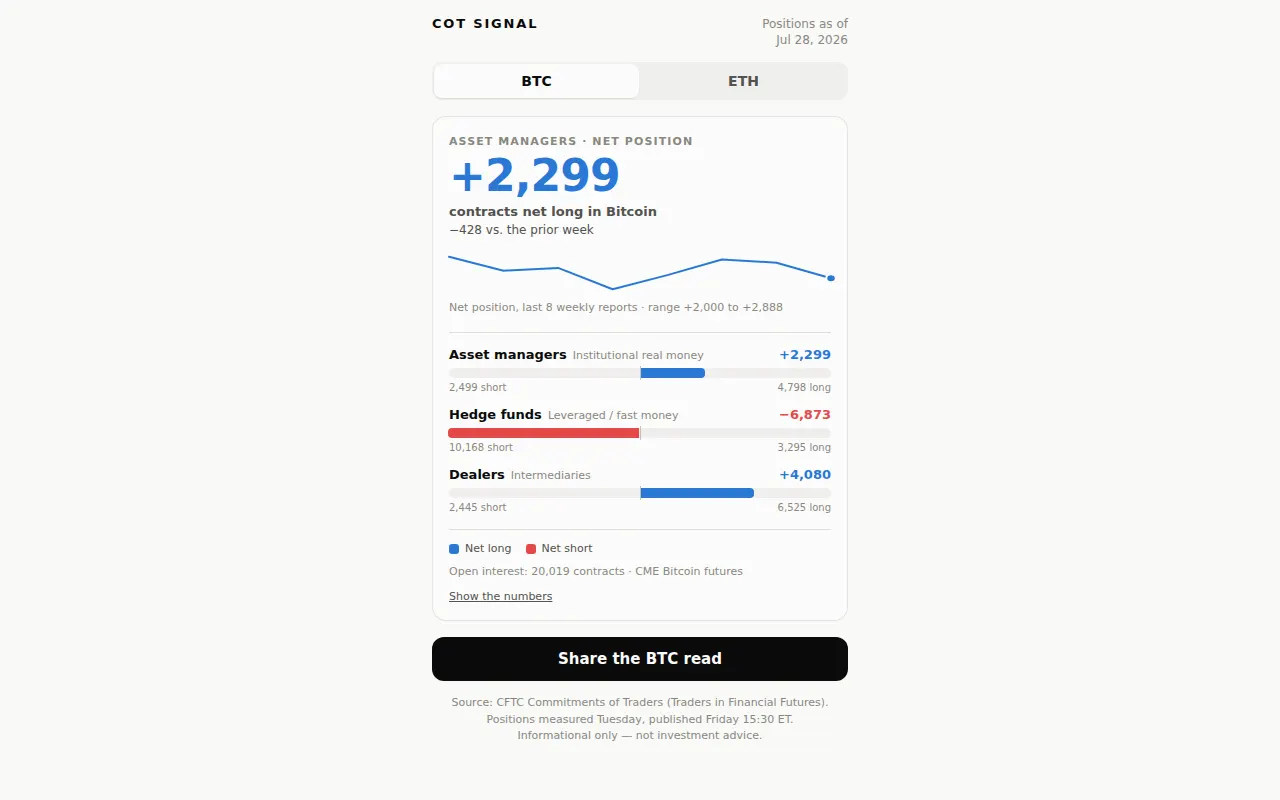
Weekly CME futures positioning for Bitcoin and Ether, read straight off the CFTC Commitments of Traders report — asset managers, hedge funds, and dealers, net long against net short.
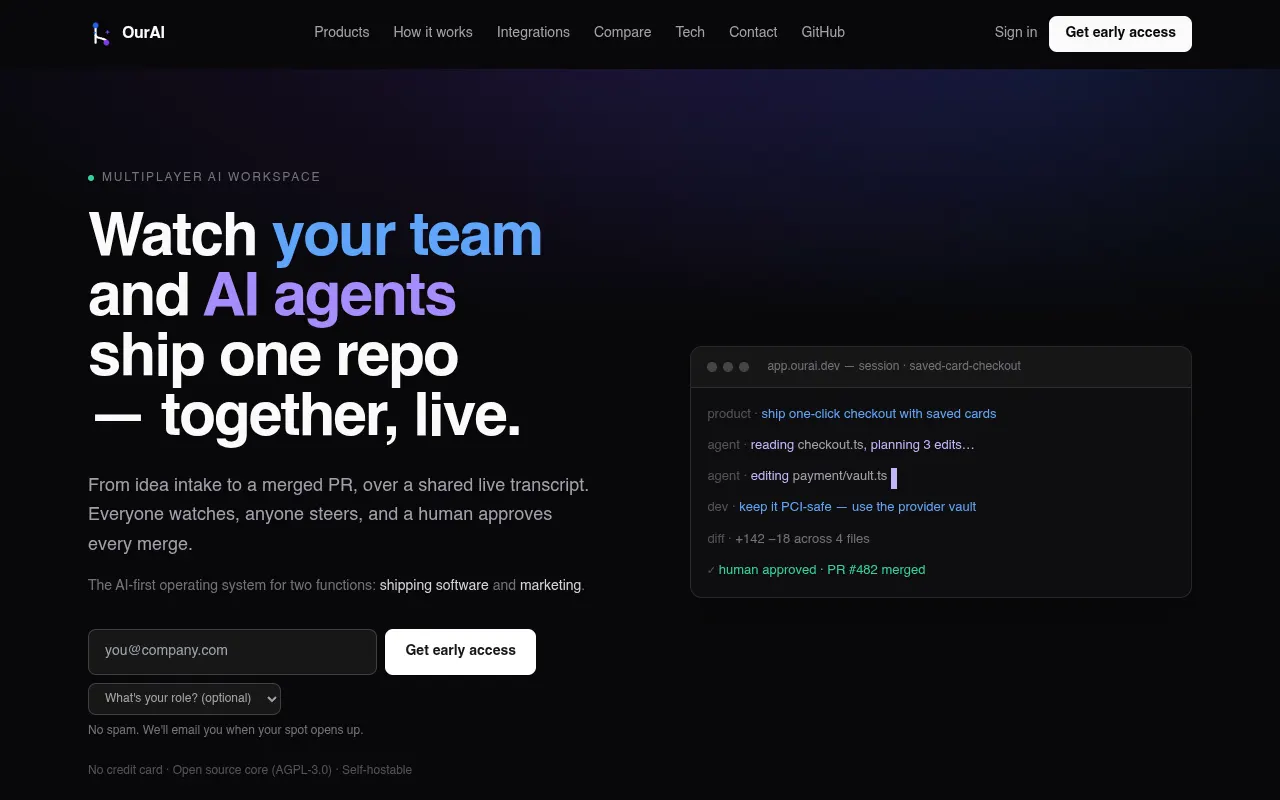
Multiplayer AI workspace where a team and AI agents ship one repo together over a shared live transcript — from idea intake to a human-approved, merged pull request.
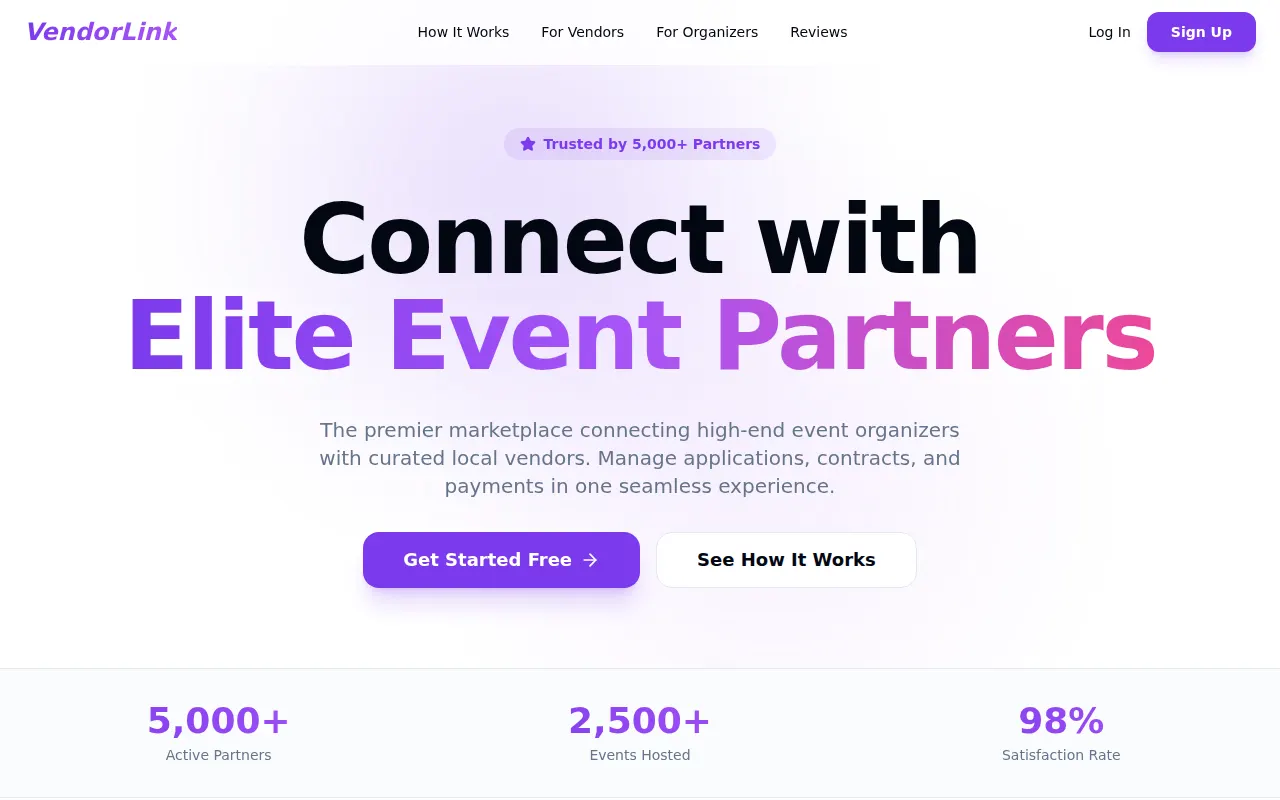
Two-sided marketplace pairing event organizers with local vendors — profiles, one-click applications and invitations, digital contracts, and payment all in one flow.
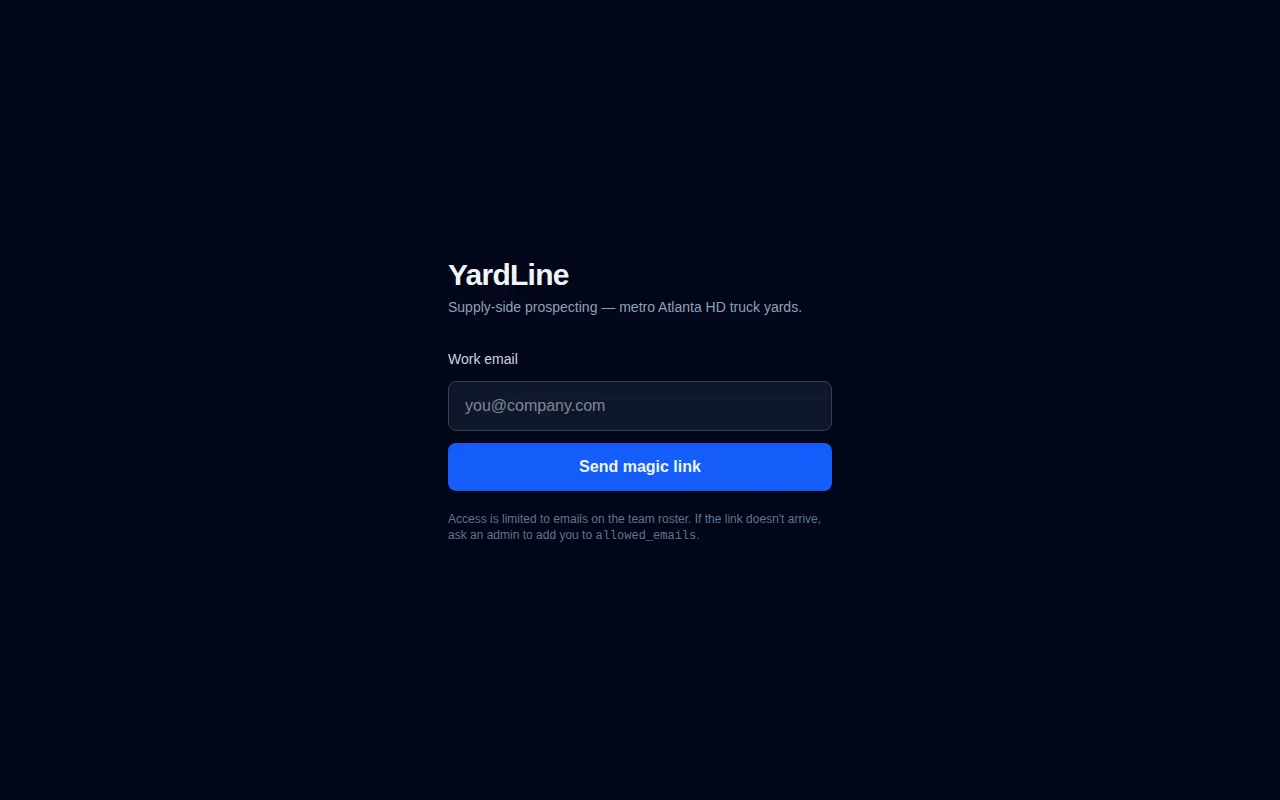
Supply-side prospecting CRM for heavy-duty truck salvage yards around metro Atlanta. Access is roster-gated behind a magic link, so the public entry point is the sign-in screen.
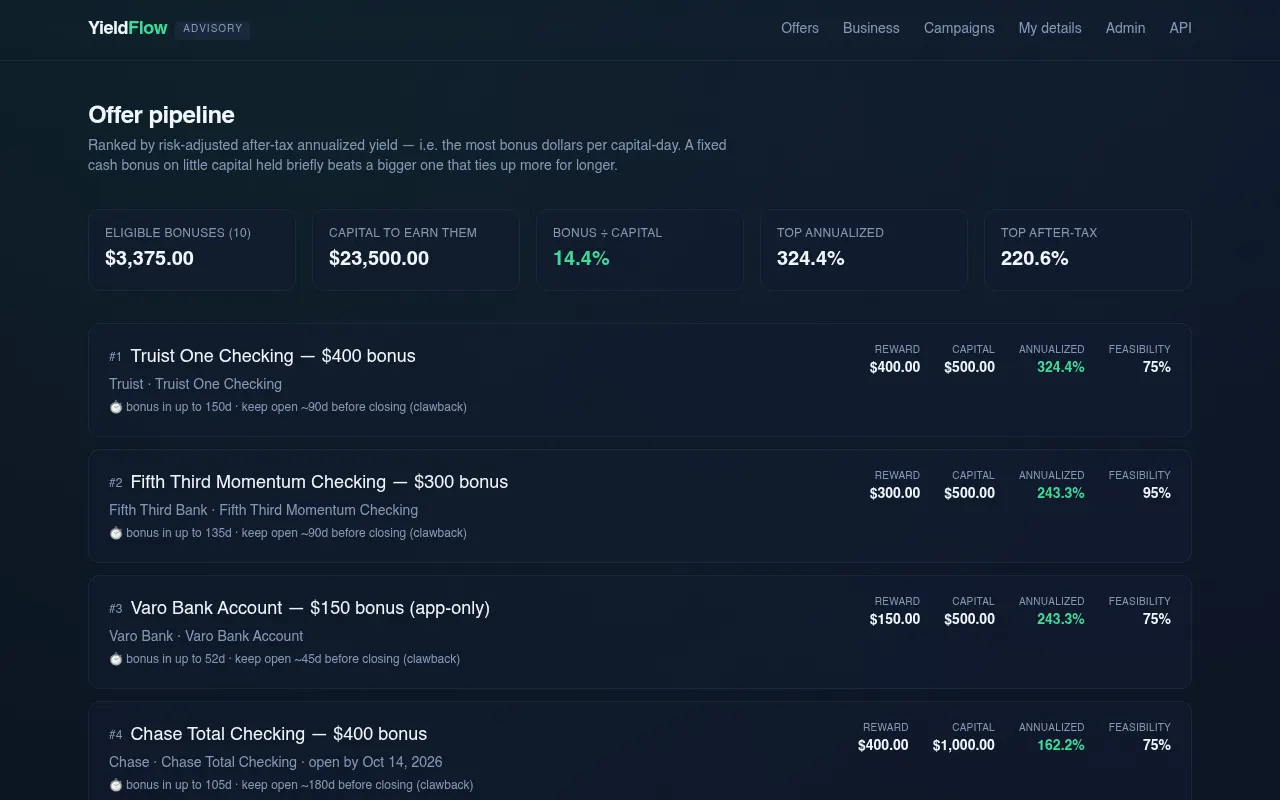
Bank-bonus yield optimizer. Ranks cash-bonus offers by risk-adjusted, after-tax annualized yield so every capital-day is put to work on the most efficient offer.
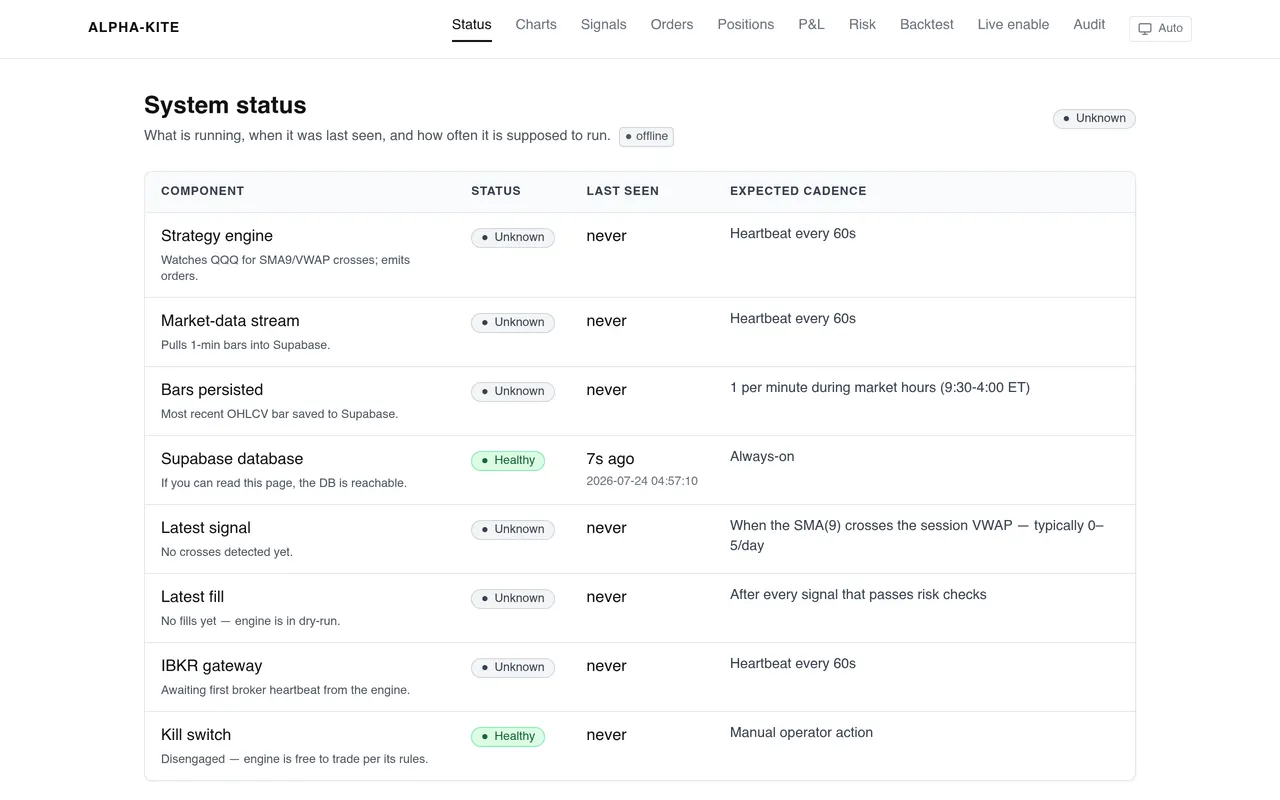
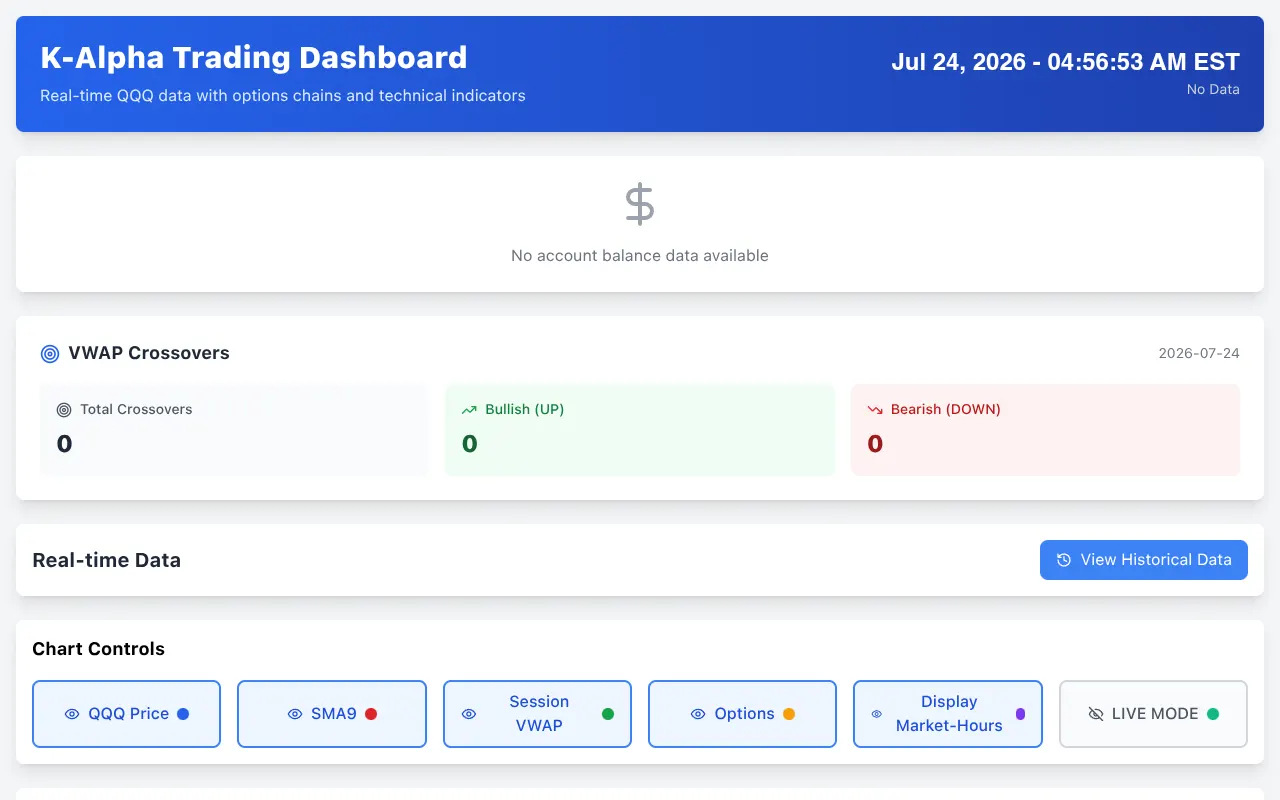
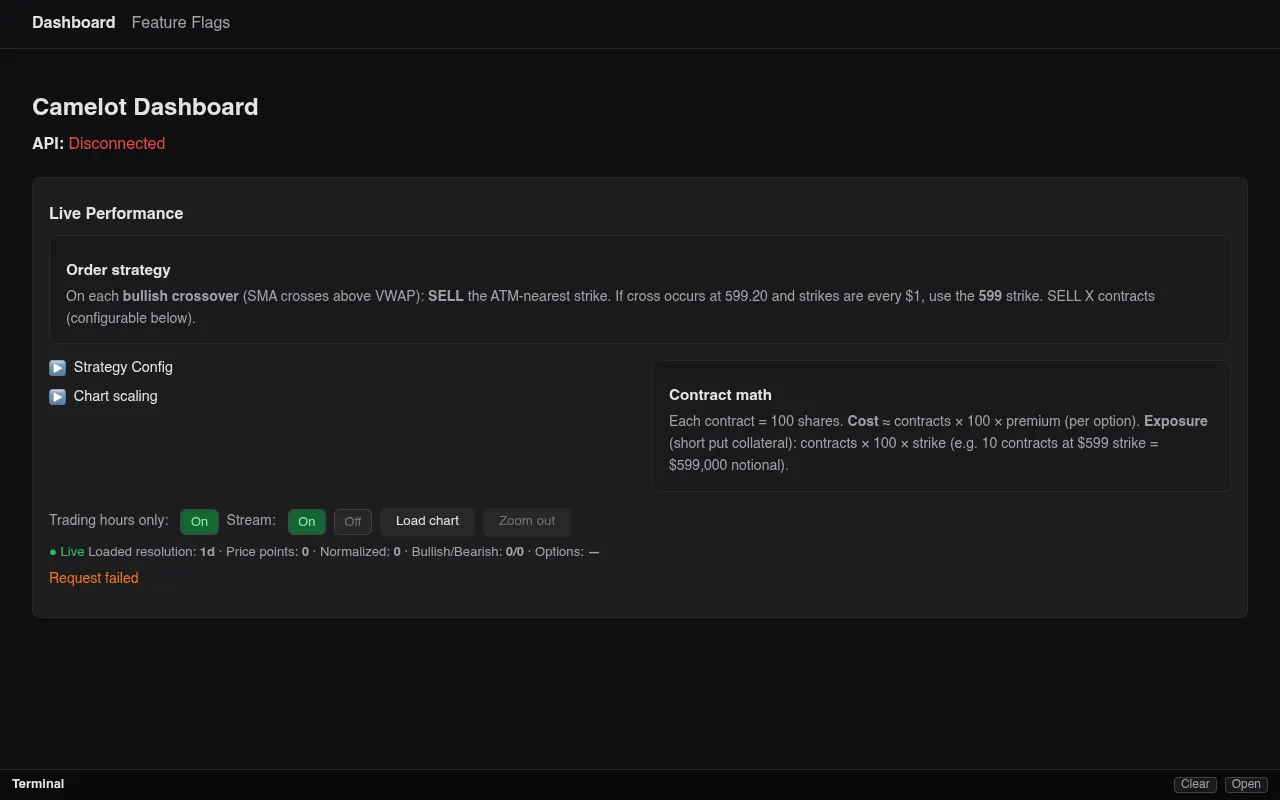
Operations console for an automated QQQ trading system — live status, signals, orders, positions, P&L, risk checks, and a manual kill switch over a Supabase backend.
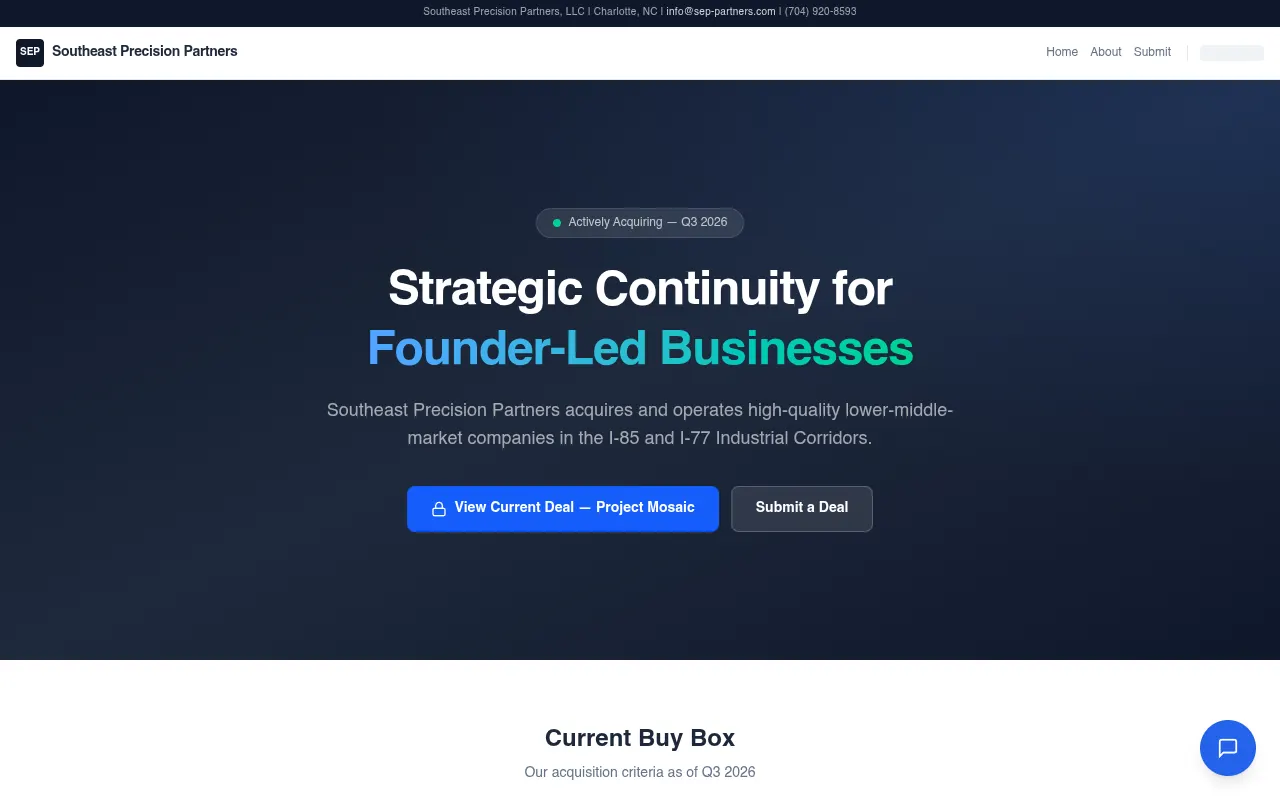
Acquisition holdco site targeting founder-led, lower-middle-market companies in the I-85 and I-77 corridors, with a live buy-box and a deal-submission flow.
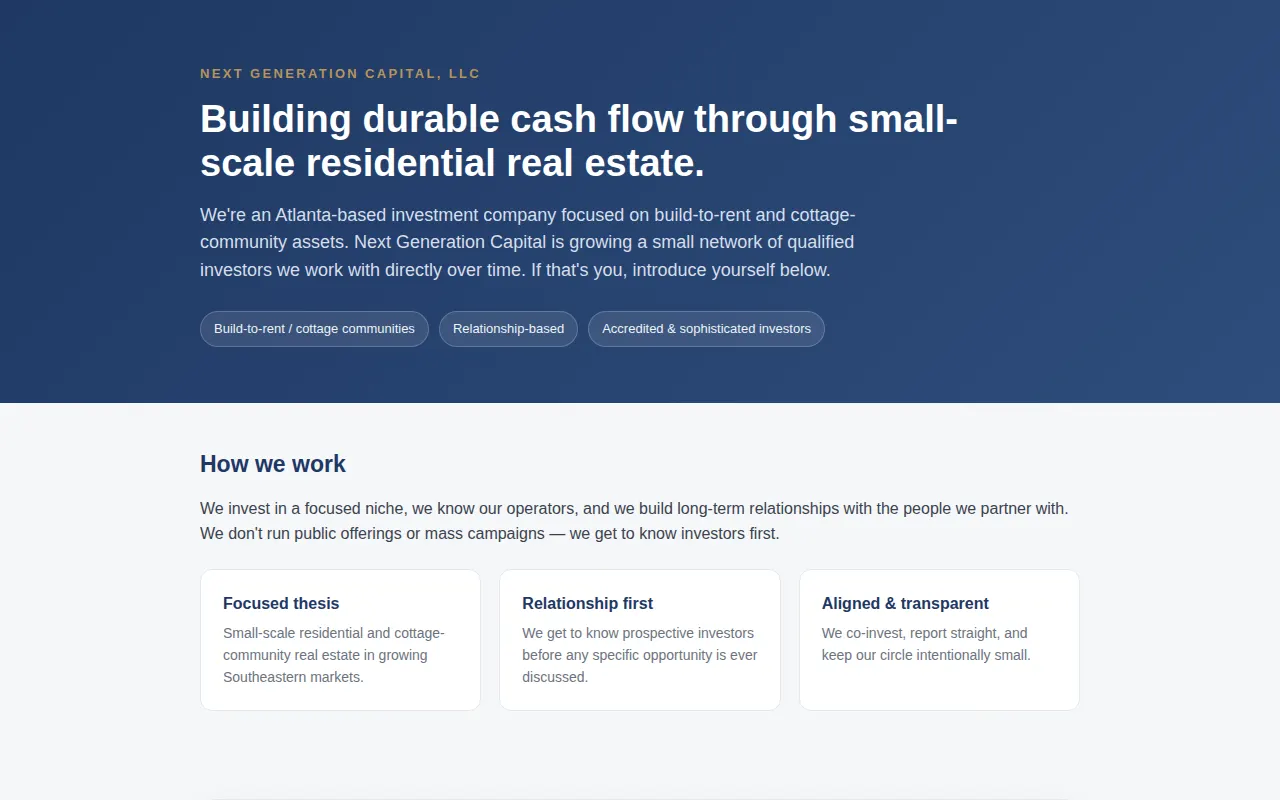
Investor-network site for an Atlanta build-to-rent and cottage-community investment company. Relationship-first by design — it states the thesis and opens an introduction, rather than running a public offering.
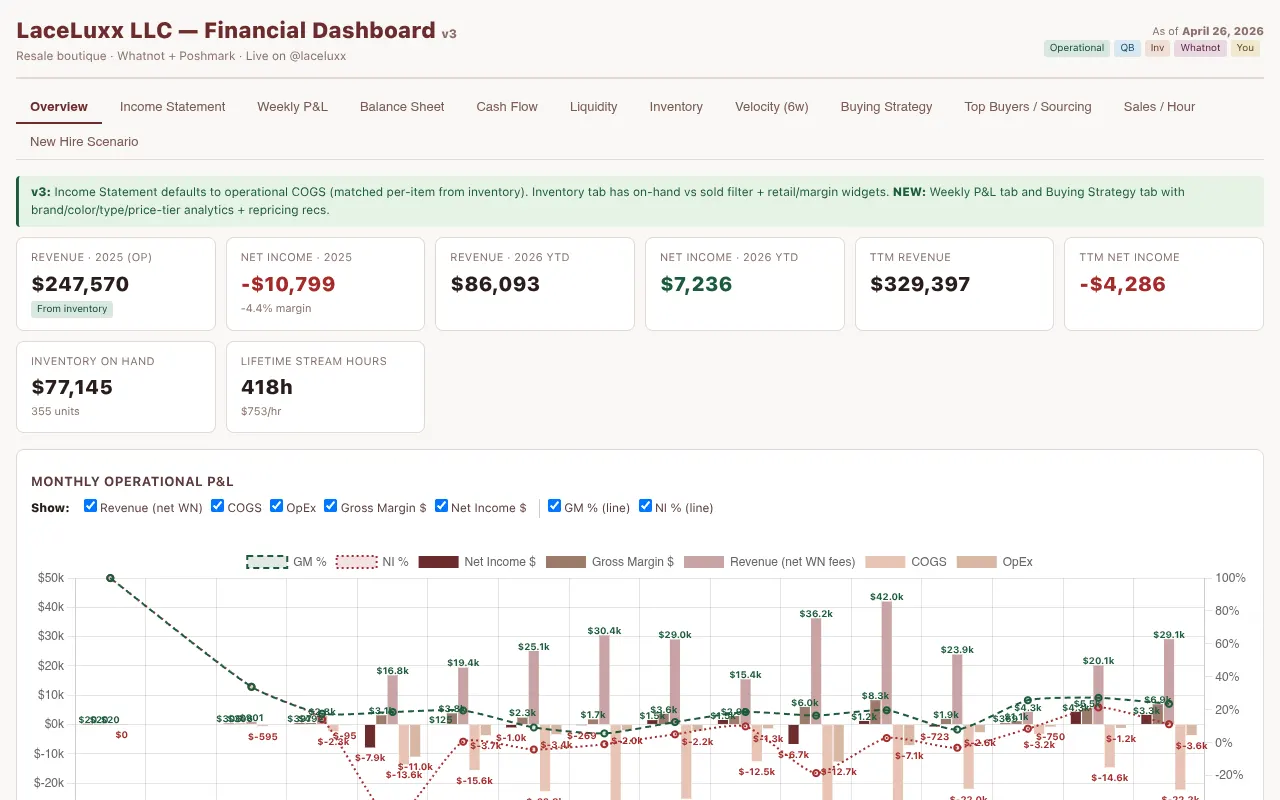
Financial-reporting dashboard for the Lace Luxx resale boutique — P&L, balance sheet, cash flow, inventory velocity, and buying-strategy analytics in one view.
Stand up a new product-idea launch — marketing site, analytics, database, payments and booking — in under fifteen minutes, repeatedly, for many ideas in parallel. One hosting project per launch; everything underneath shared and joined by a single launch_slug. Runs with zero credentials; each unconfigured integration degrades to a no-op with one warning.
An outbound calling agent for a residential maintenance contractor. Finds who approves vendors at property managers and hands the answer to a person; it does not sell, quote or book. Suppression, do-not-call, consent, line type, calling window and daily caps are decided in one database transaction before anything reaches the phone network, and consent records are never edited or deleted.
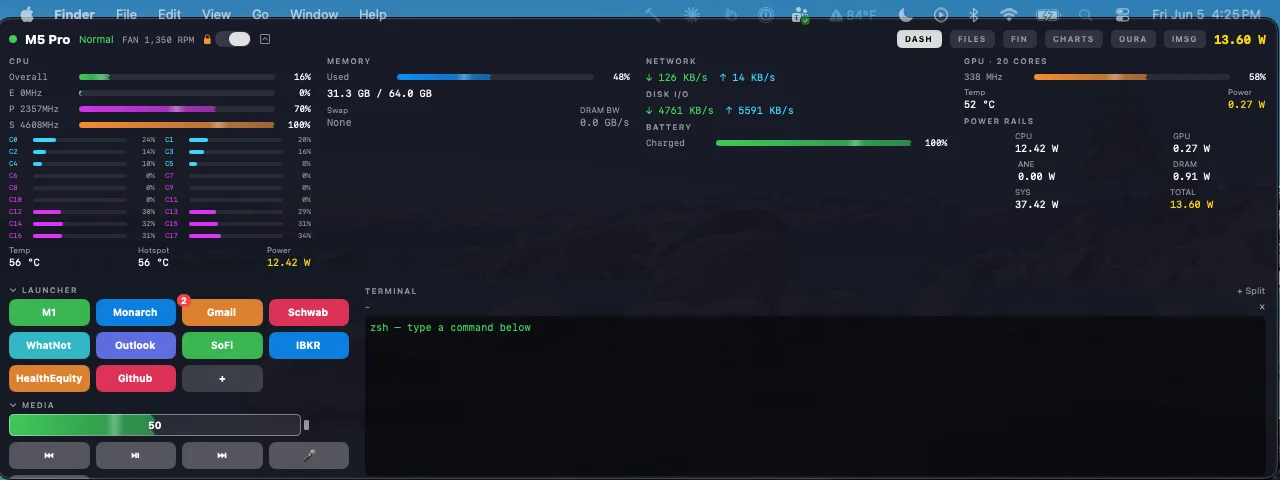
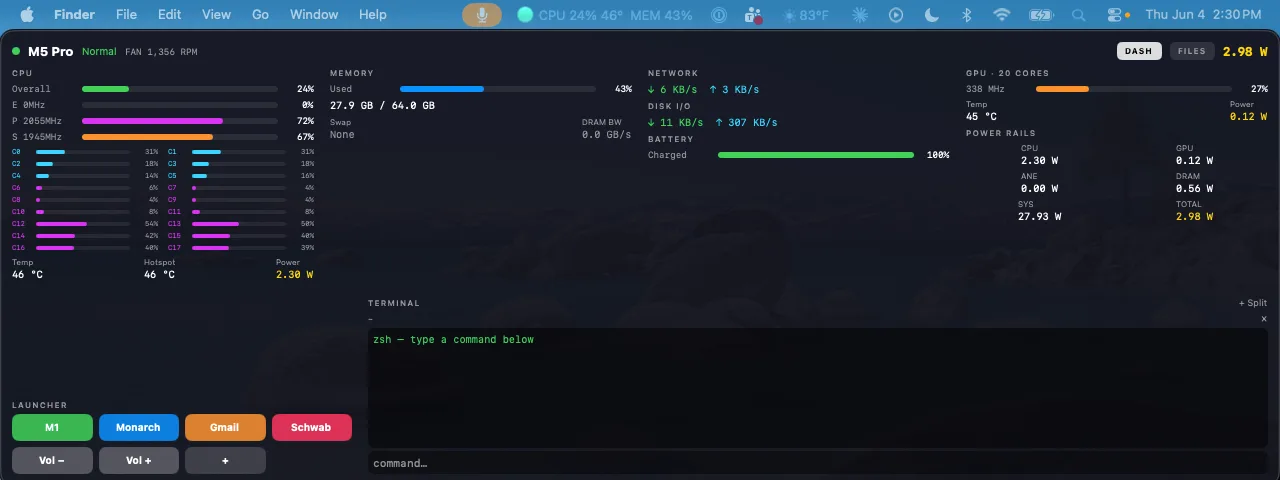
A fork of the Apple Silicon menu-bar system monitor, extended with a resizable Desktop HUD — live CPU, memory, network, GPU, battery, and power-rail metrics, a launcher tile grid, an embedded terminal, and tabs for finances, calendar, iMessage, and a multi-agent Claude assistant.
Turns any touchscreen monitor into a real touch control deck for macOS. A root launchd daemon seizes the touch device below WindowServer, maps taps to the bound display, and snaps the cursor back the instant your finger lifts.
Privacy-first, on-device context capture — watches your screen, mic, and active app, reduces each window of activity to plain text via OCR and Whisper, then deletes the raw media. Only redacted text ever persists, ready to feed a local LLM or a Claude scheduled task.
A Model Context Protocol server that hands an agent real research tools rather than a search box: price and fundamentals, multi-source news with sentiment scoring, housing and macro indicators, and valuation analysis — all callable as typed tools over a single equity.
A native Go/Win32 desktop toolbar for collections agents — CRM account scraping, timezone-aware quiet-hour compliance checks, and one-key call actions, with no AutoHotkey runtime and no interpreted script to drift out of sync with the UI.